Steel Sliding Gate Fabrication for Round Rock Homes

Two pieces of tubing that look identical from six feet away can differ in wall thickness by a third, and that difference decides whether a sliding gate frame stays square or sags at the leading edge, as the notes at sliding gates round rock new trouble describe. Fabrication for a Round Rock driveway starts at the steel rack and ends at the coating booth, and every step in between changes how long the gate lasts.
Choosing the tubing
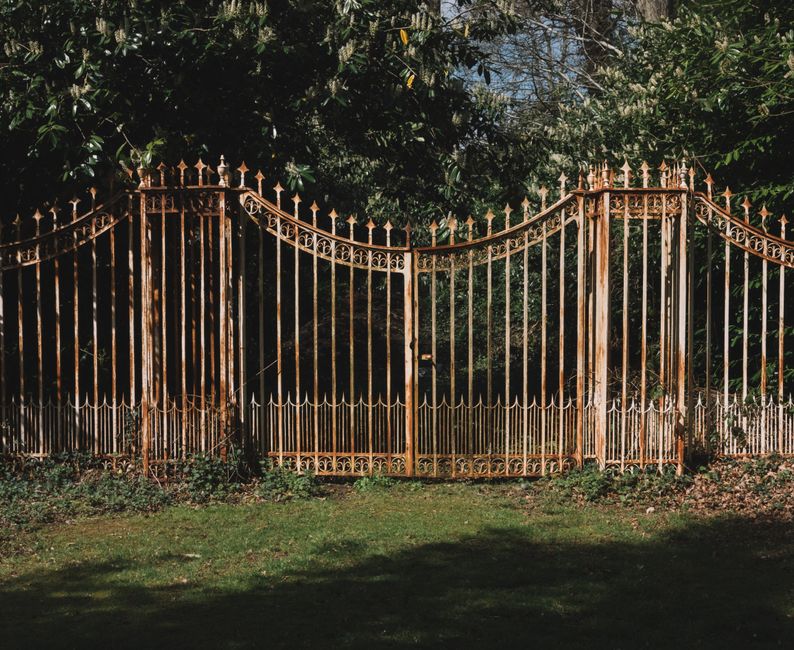
Frames are cut from square or rectangular steel tubing, and the wall thickness is picked to suit the span. A long cantilever gate needs heavier tubing than a short slide gate, because the tail and the leading edge carry bending load. Aluminum is lighter and does not rust, though it takes more section to match steel for stiffness on a wide opening.
Cutting and weld

Pieces are cut to length on a saw, then laid out flat on a table and tacked square before any full weld goes on. A frame welded without checking diagonals comes out as a parallelogram. After tacking, each joint gets a full weld, ground flush where the infill or picket will sit, and the weld is inspected for pinholes that would let water into the tube.
Infill and details
Picket spacing is set so a small child or dog cannot pass, and top rails are kept clear of the roller carriages. Wrought iron scrollwork is hot formed and welded in, and flat bar panels are welded behind the frame. Details such as latch plates, rack mounting pads and stop brackets are added in the shop so they line up with the post layout.
Prep and coating
Bare steel is cleaned of mill scale and oil, then either galvanized or primed with a rust inhibiting coat. Powder coat goes on over a prepared surface and is baked, which gives a harder skin than paint. Weld seams and cut ends are the places a coating fails first, so they get extra attention before finishing.
Fit before delivery
The finished frame is dry fitted against the carriage spacing and measured twice against the opening. Williamson County lots with a few inches of slope or a post that leans slightly need adjustments before installation day, not during it. Time spent measuring on site is cheaper than reworking a welded frame.
Hardware gets the same care as the frame. Latch keepers, rack mounting plates and stop brackets are welded or bolted square to the frame so nothing has to be forced into line on site, and every bolt hole is checked against the post layout before the coating goes on.